
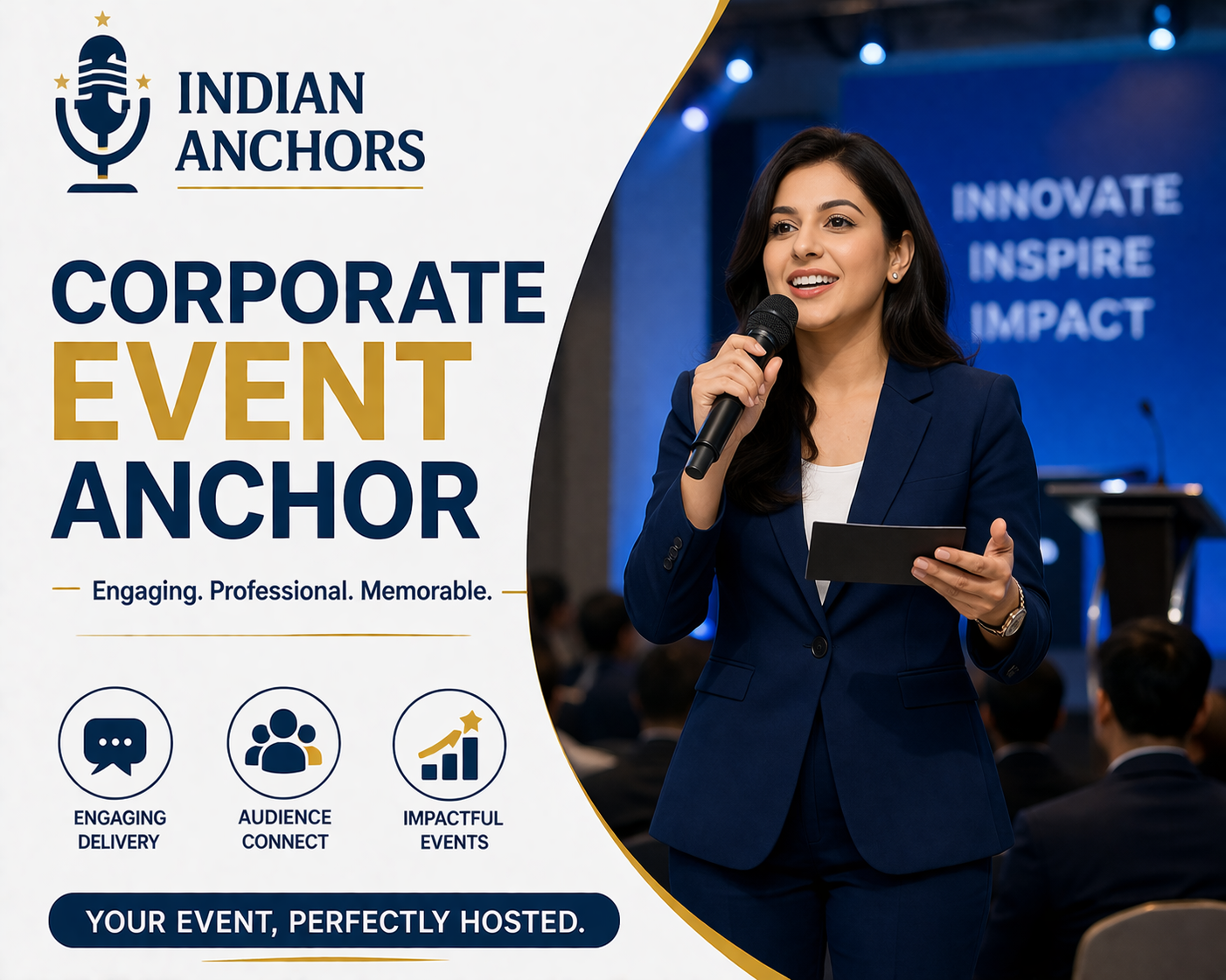
A corporate event anchor, also known as an emcee (MC), plays a crucial role in ensuring the smooth execution of business events. From conferences and seminars to product launches and award ceremonies, a professional anchor sets the tone, engages the audience, and keeps the event organized.
In 2026, corporate events have become more dynamic and experience-driven. Companies are focusing on audience engagement, brand storytelling, and seamless event flow. This is where a skilled corporate event anchor becomes essential. They not only introduce speakers and manage transitions but also create an engaging atmosphere that reflects the company’s brand image.
A good corporate anchor combines communication skills, stage presence, adaptability, and professionalism to deliver a memorable event experience.
Roles and Responsibilities of a Corporate Event Anchor
1. Event Flow Management
A corporate anchor ensures that the event runs according to schedule. They introduce sessions, speakers, and activities while maintaining a smooth transition between segments.
2. Audience Engagement
Engaging the audience is one of the most important responsibilities. Anchors use humor, storytelling, and interactive elements to keep attendees interested and involved.
3. Brand Representation
The anchor represents the company’s image and values. Their tone, language, and presentation style must align with the brand identity.
4. Coordination with Organizers
Anchors work closely with event planners, technical teams, and speakers to ensure everything runs smoothly.
5. Handling Unexpected Situations
Live events often come with challenges such as delays or technical issues. A skilled anchor can manage such situations confidently without disrupting the flow.
6. Professional Communication
Clear and confident communication is essential for delivering announcements, instructions, and key messages.
Skills Required to Become a Successful Corporate Event Anchor
1. Excellent Communication Skills
Strong verbal communication and clarity are essential for delivering messages effectively.
2. Confidence and Stage Presence
A confident personality helps in capturing the audience’s attention and maintaining authority on stage.
3. Adaptability
Corporate events can be unpredictable. Anchors must be flexible and quick-thinking.
4. Knowledge of Corporate Culture
Understanding business etiquette and corporate expectations is crucial.
5. Time Management
Anchors must ensure that each segment stays within the allocated time.
6. Networking Skills
Building relationships with clients and event organizers can help anchors grow their careers.
7. Preparation and Research
A good anchor prepares thoroughly by understanding the event agenda, speakers, and audience profile.
Frequently Asked Questions (FAQs)
1. What is a corporate event anchor?
A professional host who manages and presents corporate events.
2. What types of events do corporate anchors host?
Conferences, seminars, product launches, award shows, and corporate meetings.
3. Why is a corporate anchor important?
They ensure smooth event flow and engage the audience.
4. What skills are required to become an anchor?
Communication, confidence, and adaptability.
5. How much does a corporate anchor charge?
Fees vary from ₹10,000 to ₹2 lakh depending on experience.
6. Can beginners become corporate anchors?
Yes, with practice and proper training.
7. Is scripting important for anchoring?
Yes, it helps maintain structure and clarity.
8. How to improve anchoring skills?
Practice speaking, attend workshops, and gain experience.
9. Do anchors need formal training?
Not mandatory, but training can enhance skills.
10. What is the role of humor in anchoring?
It helps engage the audience but should be used appropriately.
11. Can anchors handle virtual events?
Yes, many anchors now host online and hybrid events.
12. What is the difference between an MC and an anchor?
Both are similar, but MC is a more formal term.
13. How to become a corporate event anchor in India?
Start with small events and build a portfolio.
14. What is the career scope for anchors?
It is growing with increasing corporate events and digital platforms.
15. Do anchors need to prepare before events?
Yes, preparation is essential for success.